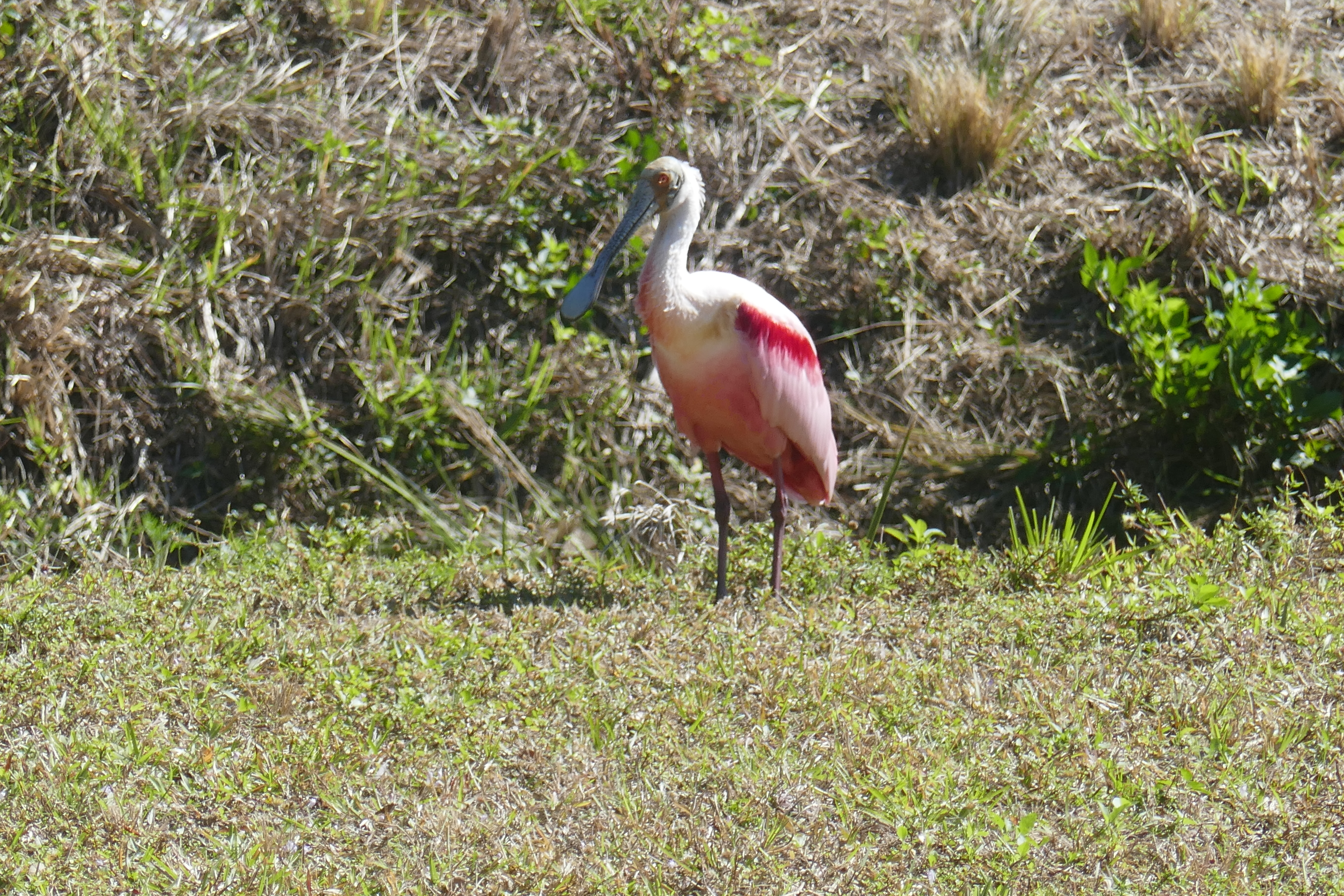
In the realm of avian beauty, few birds captivate me like the roseate spoonbill. Its mere presence is a sight to behold—a delicate symphony of pink hues gracefully sweeping through Florida’s wetlands, marshes, and coastal havens. These striking creatures are distinguished by their luminous pink plumage and distinctive spoon-shaped bills, perfectly adapted for skimming shallow waters in pursuit of small aquatic prey like invertebrates and fish. While common in Florida, I do not see them very often.

The Sunshine State’s diverse wetland ecosystems, from the expansive Everglades to its pristine coastal marshes, offer an ideal sanctuary for these elegant birds. As a result, sightings of roseate spoonbills are relatively common in certain pockets of Florida, where they thrive amidst the abundant waters and lush landscapes.


In the landscapes of Florida, I often witness the graceful coexistence of roseate spoonbills and the endangered wood storks. These two avian beauties share habitats in wetlands, marshes, and coastal areas, where they peacefully pursue their diets of fish and invertebrates. While occasional competition for food resources may arise, their feeding techniques and preferred habitats differ sufficiently to mitigate direct rivalry.

Roseate spoonbills are renowned for their stunning pink plumage and distinctive spoon-shaped bills, adeptly skimming shallow waters to secure their prey. In contrast, wood storks, recognized by their elongated bills, are commonly observed wading in shallow waters, employing a tactile feeding approach to capture small aquatic organisms.


Their interactions in these shared habitats often illustrate a mutual tolerance rather than aggressive competition. Observing these species together provides a glimpse into the intricate dynamics of wetland ecosystems and underscores the rich diversity of bird life thriving in these environments.


For bird enthusiasts and nature lovers alike, encountering a roseate spoonbill is a testament to the intricate beauty and resilience of wildlife in Florida’s unique habitats. As for many other of Florida’s wading birds, they face challenges such as climate change and habitat loss.


Leave a Reply