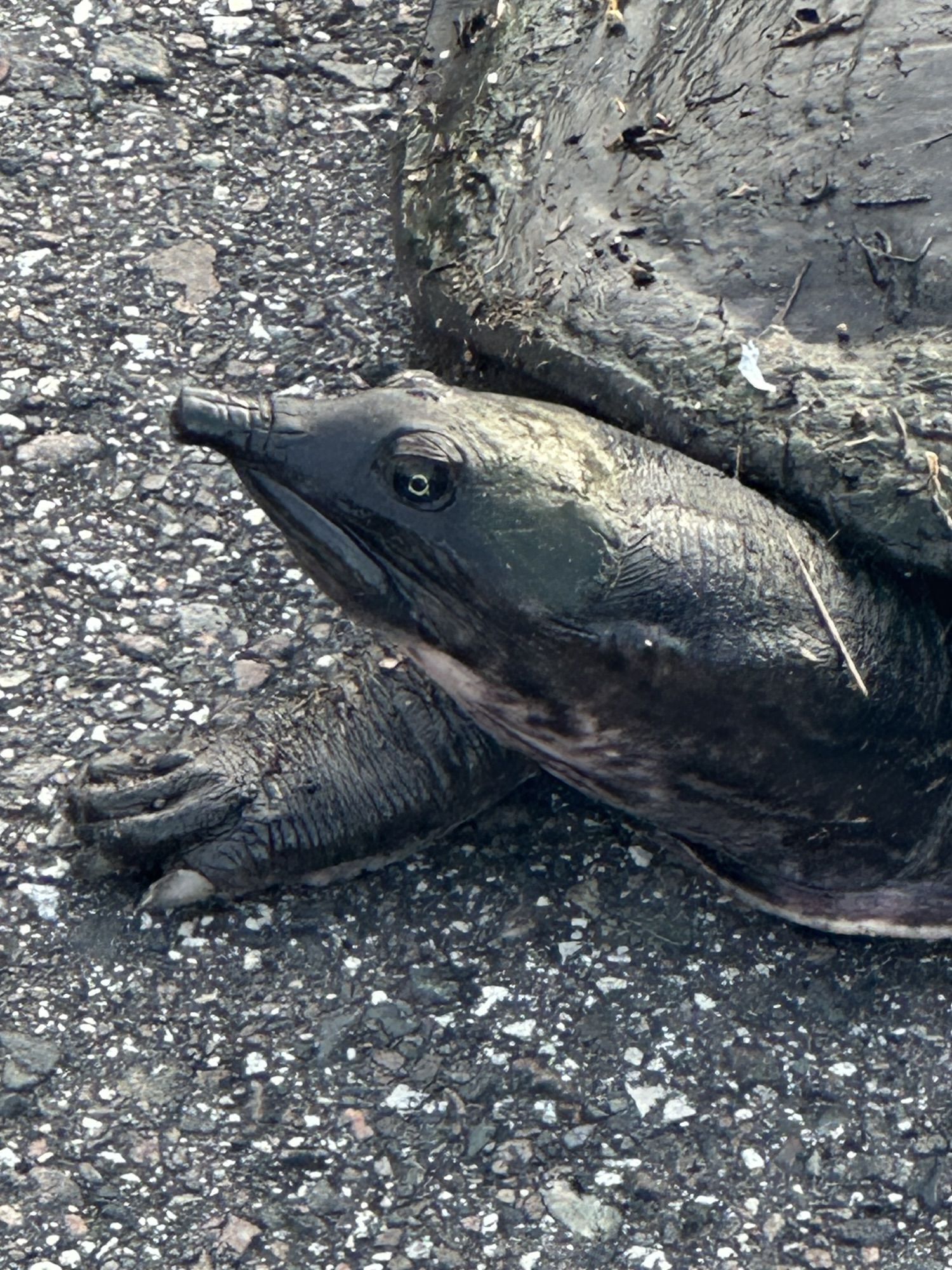
Florida’s waterways are home to many fascinating creatures, and one of the most unique is the Florida softshell turtle (Apalone ferox). Known for its distinctive appearance and behavior, this freshwater turtle is a true Floridian icon. I happened to see this individual near my house after I got out of my car.

Identifying Features
Unlike the hard, dome-shaped shells of many turtles, the Florida softshell has a leathery, flexible carapace. This “soft” shell is flat and can be brown or olive, often with a pattern of spots or markings that help it blend in with its environment. The turtle’s long, pointed snout resembles a pig’s nose, and its webbed feet make it an excellent swimmer.

Habitat and Diet
Found primarily in Florida’s rivers, lakes, and ponds, softshell turtles prefer shallow, slow-moving waters with muddy bottoms, where they can easily bury themselves in the sand or mud to stay hidden from predators. They are opportunistic feeders, preying on fish, amphibians, insects, and even aquatic plants. Their ability to wait patiently for prey while submerged makes them efficient hunters.

Behavior and Conservation
Softshell turtles are primarily active during the warmer months. They spend much of their time basking on logs or the shores of rivers, and they are known to be highly agile swimmers, often darting to safety when threatened. Though they are generally not aggressive, they can be surprisingly fast and formidable when defending themselves.
Sadly, the Florida softshell turtle is facing increasing pressures from habitat destruction, pollution, and illegal collection. Conservation efforts are underway to protect their habitats and ensure these incredible creatures continue to thrive in Florida’s ecosystems.
The Florida softshell turtle, with its distinct look and fascinating behavior, remains an important part of Florida’s natural heritage. As we learn more about their unique characteristics, we are reminded of the importance of protecting the state’s diverse wildlife for future generations.

Leave a Reply